
The traditional education system was designed in the 19th century to prepare students for industrial jobs. In the 21st century, where technology, AI, and immersive computing are shaping our world, the same model is no longer enough.
For decades, students have learned through textbooks, chalkboards, and static diagrams. While these tools helped generations of learners, they often fail to communicate complex concepts in a way that feels real and engaging. Subjects like astronomy, human anatomy, physics, and engineering require spatial understanding-something flat images simply cannot deliver.
The Problem with Traditional Learning
The 19th-century classroom model is based on passive learning. Students sit, listen, and memorize information for exams. But real understanding comes from exploration and interaction. When a student only reads about the solar system or sees a diagram of the human heart, they must rely entirely on imagination to understand how it actually works.
This gap between theory and experience often leads to confusion, lack of interest, and limited retention of knowledge. In today's digital world, students need learning methods that match how their brains naturally process information-through visual and spatial interaction.
XR: The Future of Education
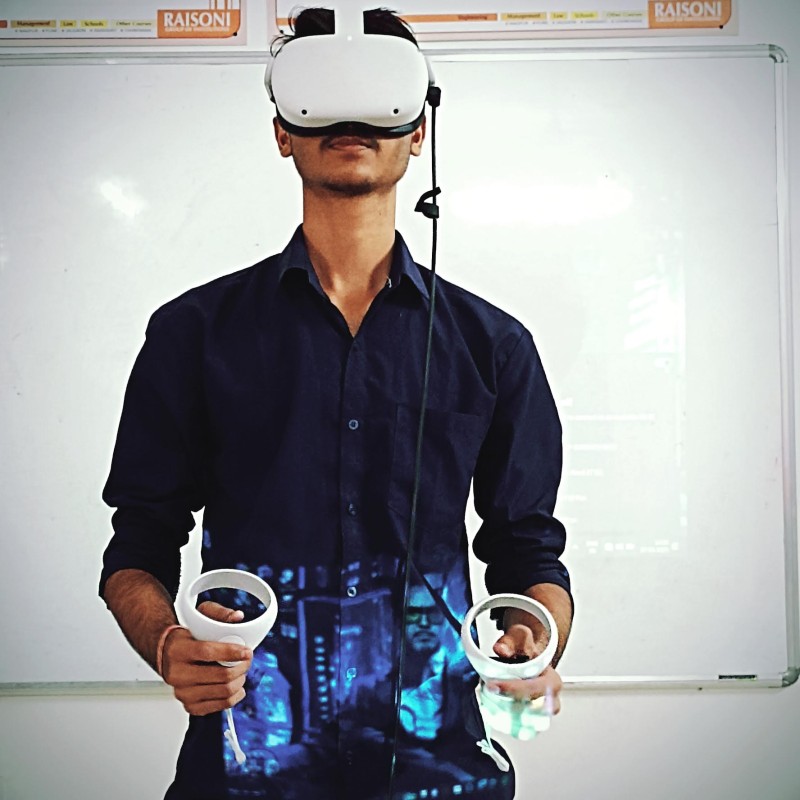
Extended Reality (XR), which includes Virtual Reality (VR), Augmented Reality (AR), and Mixed Reality (MR), is redefining how students experience knowledge. Instead of only reading about concepts, learners can step inside them.
Imagine a student exploring the solar system by walking around planets in a virtual space, or a biology student observing a beating heart in 3D. XR turns abstract concepts into immersive experiences, making learning more intuitive, engaging, and memorable.
The Education Shift
"Students learn best not by memorizing information, but by interacting with it. XR transforms education from passive observation to active exploration."
How XR Improves Learning
- Better Visualization: Complex topics like molecular structures, planetary systems, and engineering models become easier to understand in 3D environments.
- Higher Engagement: Immersive experiences make students more curious and involved in the learning process.
- Experiential Learning: Students can interact with objects, perform simulations, and explore environments rather than only reading about them.
- Safe Simulations: Dangerous or expensive experiments can be safely performed in virtual environments.
How DesignXR is Transforming Education
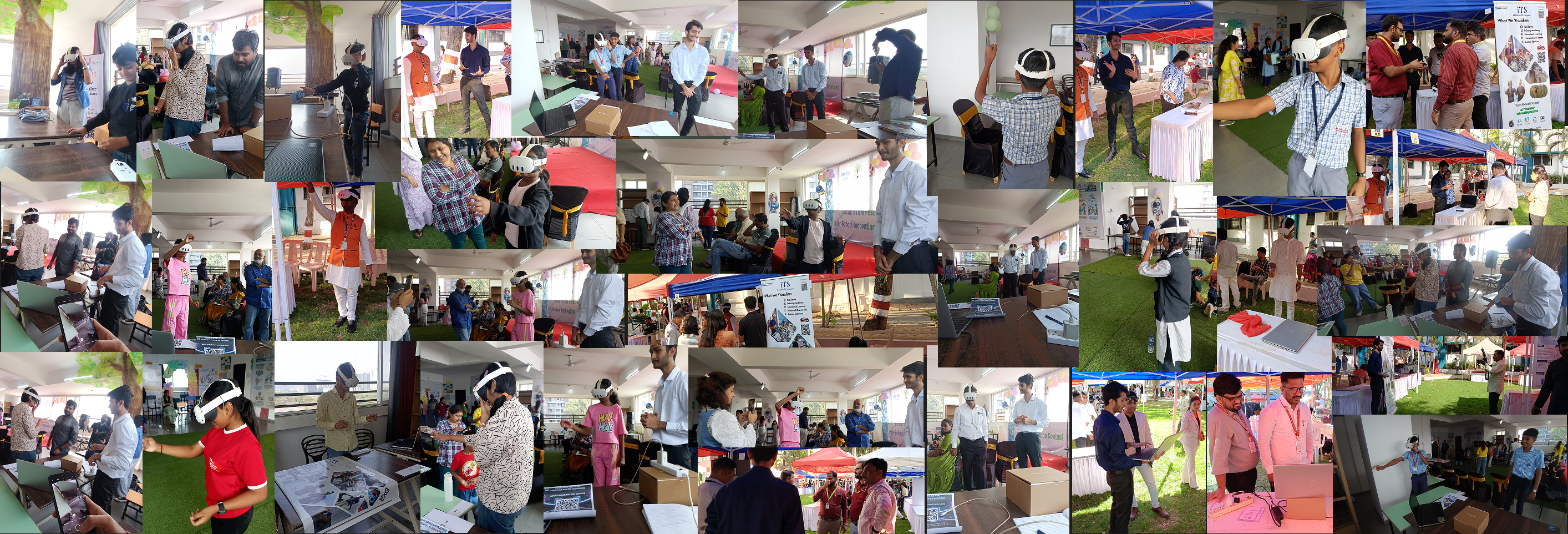
At DesignXR, we are building immersive learning experiences that make complex concepts easy to understand through XR technology. Our platform enables students, educators, and institutions to visualize and interact with educational content directly in 3D space.
Using DesignXR, students can explore scientific concepts such as the solar system, human anatomy, engineering models, and historical environments in an interactive way. Instead of only reading about a concept, they can observe it from every angle, manipulate objects, and understand how systems function in real time.
One of the key advantages of DesignXR is accessibility. Our WebXR-based platform allows students to experience immersive content directly through a web browser without needing expensive hardware. This makes immersive education more scalable for schools and colleges.
Through immersive visualization, interactive simulations, and spatial learning environments, DesignXR is helping educators bridge the gap between theory and real-world understanding.
As education evolves, tools like XR will play a critical role in shaping how the next generation learns. The future classroom will not be limited to walls and textbooks-it will be an interactive space where knowledge can be explored, experienced, and understood in ways never before possible.
For more information about DesignXR Visit : www.designxr.itsikhwal.com